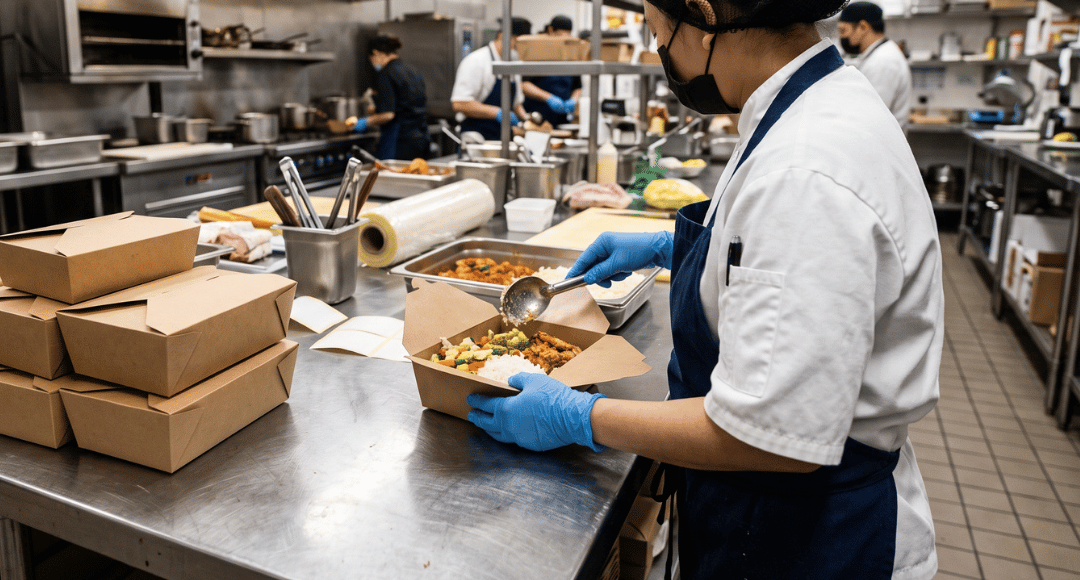
A ghost kitchen doesn’t have a dining room. It often doesn’t have a storefront sign, a host stand, or even a fixed name customers recognize by walking past it. What it does have is a kitchen, a delivery relationship (or several), and a business model built entirely around orders that arrive digitally and leave the building within minutes of being cooked. That’s a fundamentally different operating model than a traditional restaurant, and it demands a fundamentally different relationship with your point-of-sale technology.
If you’re running — or thinking about running — a delivery-only concept, a virtual multi-brand kitchen, or simply adding off-premise-only revenue to an existing restaurant, here’s how POS technology has had to adapt to keep up.
What Makes Ghost Kitchens Different, Operationally
A traditional restaurant’s POS is built around a sequence: guest arrives, gets seated, orders are taken tableside, the order routes to the kitchen, food comes out, the bill gets paid, the table turns. A ghost kitchen strips almost all of that away. There’s no table. There’s often no cashier interaction at all. Orders can arrive from multiple third-party delivery apps simultaneously, sometimes running two, three, or more virtual brands out of the same physical kitchen at once.
That creates a few very specific operational pressures:
Order aggregation is the whole game. When orders are coming in from your own site, a delivery app, and maybe a second or third delivery platform at the same time, the biggest operational risk isn’t taking the order — it’s losing track of which order came from where, missing one entirely during a rush, or double-preparing something because two systems didn’t sync.
Kitchen speed is the only customer-facing metric that matters. There’s no ambiance, no service interaction, no table turn to smooth over a slow kitchen. If food takes too long, the only thing the customer experiences is a bad delivery-app rating. A kitchen display system (KDS) that keeps ticket times visible and organized isn’t a nice-to-have here — it’s the entire operational backbone.
Multi-brand complexity. Many ghost kitchen operators run more than one virtual brand out of a single physical space to maximize delivery-app visibility and diversify menu offerings. That means a single kitchen needs to track tickets by brand, sometimes with different prep stations or sequencing, without the staff getting confused about which order belongs to which virtual storefront.
Margin sensitivity to commission fees. Third-party delivery marketplaces typically charge 20-30% commission per order. For a dine-in restaurant, that’s a cost on top of an already-profitable table. For a ghost kitchen with no dine-in revenue at all, that commission is being taken on effectively every dollar the business makes — which makes commission-fee management not a side conversation, but central to whether the concept is profitable at all.
How POS Technology Has Adapted
Centralized order aggregation. Modern restaurant POS platforms are increasingly built to pull orders from multiple channels — your own online ordering, in-app orders, and third-party delivery platforms — into a single ticket stream, rather than forcing kitchen staff to physically watch four different tablets bolted to a wall. This alone dramatically cuts down on missed or delayed orders during rush periods.
Kitchen display systems built for speed, not ambiance. A KDS designed for a ghost kitchen prioritizes clarity and speed over anything else: color-coded ticket aging, clear sequencing across multiple simultaneous brands, and simple bump/complete workflows that don’t require training staff on a complex interface mid-rush.
Direct, commission-free ordering as a counterbalance. Since third-party marketplace fees eat directly into margin, more operators are pushing customers toward direct ordering channels — a branded site or app — where the business doesn’t hand over 20-30% per transaction. Delta1st’s 0% commission online ordering is built specifically around this problem: it gives restaurant and ghost kitchen operators a direct-to-customer ordering channel without the marketplace cut, which matters even more when there’s no dine-in revenue to offset the fee.
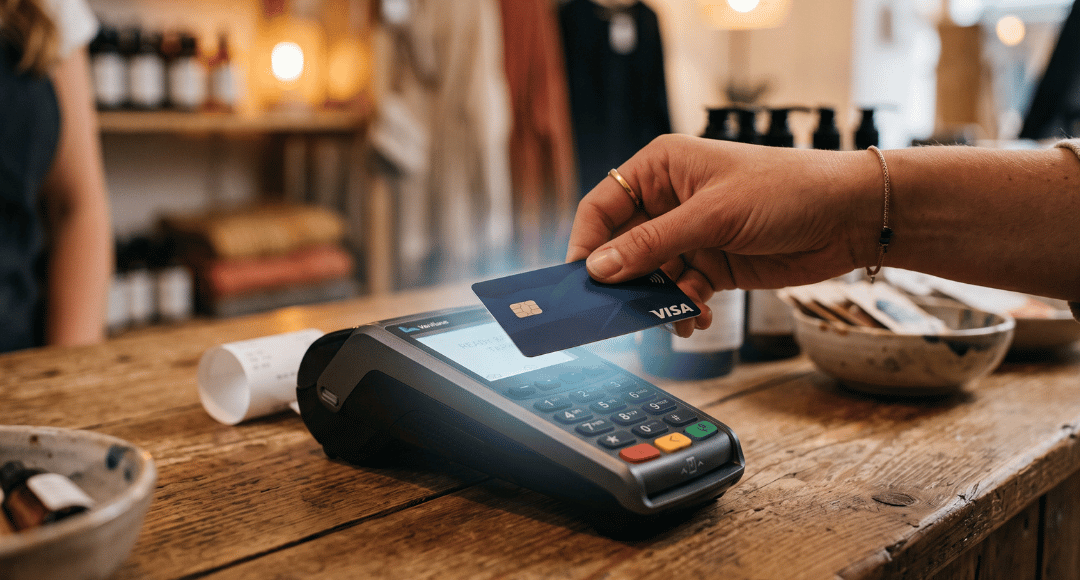
QR and contactless workflows adapted for pickup, not tables. Even without a dining room, contactless ordering and payment tools remain relevant for hybrid models — a ghost kitchen with a small walk-up pickup window, for example, benefits from the same tap-to-pay and QR-based workflows a full-service restaurant would use tableside.
Multi-location and multi-brand reporting. For operators running several virtual concepts (or several physical ghost kitchen locations), centralized reporting that separates performance by brand and by location — without needing a separate POS license or dashboard for each — is what actually makes the multi-brand strategy manageable rather than a spreadsheet nightmare.
The Commission Math Every Ghost Kitchen Operator Should Run
It’s worth being explicit about the math here, because it’s easy to underestimate how much delivery-app commission actually erodes margin for an off-premise-only business. A restaurant with a healthy dine-in and delivery mix can often absorb marketplace commissions as a cost of the delivery channel specifically, cross-subsidized by higher-margin dine-in sales. A ghost kitchen doesn’t have that cushion — every order is, by definition, running through some delivery or pickup channel, so commission fees apply to effectively all revenue, not a slice of it.
This is exactly why building a direct ordering channel — even a modest one — matters disproportionately more for a ghost kitchen than for a traditional restaurant. Shifting even 15-20% of order volume from a 25%-commission marketplace to a 0%-commission direct channel can be the difference between a ghost kitchen concept that’s marginally profitable and one that comfortably is.
What to Look For If You’re Evaluating a POS for This Model
If you’re setting up or re-evaluating a ghost kitchen’s technology stack, a few questions are worth asking before you commit:
- Can the system aggregate orders from multiple third-party delivery platforms into one ticket stream, or will your kitchen be watching several separate tablets?
- Does the kitchen display system support multiple concurrent brands with clear visual separation?
- Is there a genuine 0%-commission direct ordering option, or is “online ordering” just another marketplace integration with its own fee structure?
- Can you see performance broken out by brand and by location without manually reconciling reports from different systems?
- Does the reporting distinguish delivery-channel margin from direct-channel margin, so you can actually see the commission impact in dollar terms, not just intuit it?
The Bottom Line
Ghost kitchens compressed the restaurant experience down to its most operationally demanding core: speed, accuracy, and margin discipline, with none of the dine-in revenue that traditionally cushions those pressures. The POS technology built for this model has had to adapt accordingly — less about tableside service, more about order aggregation, kitchen throughput, and commission-fee management. If your current setup was built primarily for a dine-in restaurant and bolted on delivery as an afterthought, it’s worth asking whether it’s actually built for how a ghost kitchen operates, or just tolerating it.
Your Ghost Kitchen Runs on Speed, Accuracy, and Profitability. Your POS Should Too.
Stop letting disconnected ordering platforms, inefficient kitchen workflows, and costly third-party delivery commissions eat into your profits. Delta1st POS, powered by Woodforest Acceptance Solutions, delivers smarter restaurant technology, streamlined operations, and 0% commission online ordering to help you take control of your business.
Contact Delta1st today to discover how the right POS solution can simplify your ghost kitchen operations, reduce unnecessary costs, and help you grow your bottom line.